 listicle
Swimlane Alternatives for AI Automation in 2026
Table of Contents
- Why Organizations Are Looking Beyond Swimlane
- Comparison Table: Swimlane Alternatives at a Glance
- No-Code AI Workflow Automation Tools That Replace Swimlane
- AI Automation for SOC Operations: Enterprise-Grade Platforms
- How to Choose the Right Swimlane Alternative
- VegaNext: AI-Native Alternative for Managed Security Operations
- Common Mistakes When Switching from Swimlane
- Conclusion
Last Updated: August 9, 2026
Why Organizations Are Looking Beyond Swimlane
Security teams are reassessing their incident response infrastructure as organizations demand faster alert triage, deeper API flexibility, and platforms that scale without months of custom configuration. The core problem is alert fatigue: SOCs process thousands of daily alerts, but only a fraction warrant human attention. Traditional SOAR platforms like Swimlane excel at orchestration, but weren't built for modern threat detection speed or hybrid cloud complexity.
Organizations seek alternatives offering three capabilities: native AI-powered alert triage reducing false positives, low-code or no-code interfaces avoiding lengthy implementation, and usage-based pricing rather than fixed annual commitments. This guide examines the best Swimlane alternatives available in 2026, breaking down how each platform approaches security orchestration, automation, and response.
Comparison Table: Swimlane Alternatives at a Glance
| Platform | Best For | Approach | Deployment Model |
|---|---|---|---|
| VegaNext | Managed detection and response with AI automation | AI-native managed service | Fully managed |
| Tines | Security-focused teams needing flexible automation | No-code security orchestration | SaaS |
| Palo Alto Networks Cortex XSOAR | Enterprise SOCs with extensive integrations | Enterprise SOAR with generative AI | SaaS / On-prem |
| Torq AI SOC Platform | Cloud-native threat response automation | Agentic AI hyperautomation | SaaS |
| IBM Security QRadar SOAR | Organizations with IBM ecosystem investments | Incident management and playbook automation | SaaS |
| ServiceNow Security Operations | Teams with existing ServiceNow deployments | Integrated security and IT workflows | SaaS |
| n8n | Engineering teams preferring open-source control | Low-code with developer flexibility | Self-hosted / Cloud |
| Zapier | Non-technical teams automating SaaS workflows | No-code cross-app automation | SaaS |
| Microsoft Power Automate | Microsoft 365-native organizations | RPA and workflow automation with AI Builder | Cloud |
No-Code AI Workflow Automation Tools That Replace Swimlane
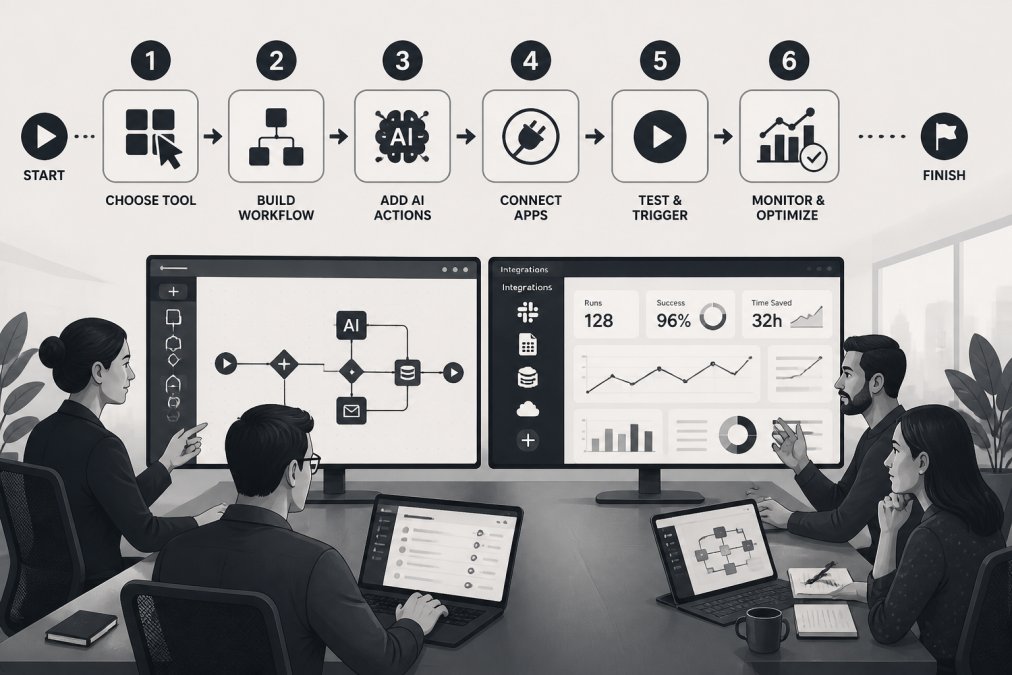
The shift toward no-code platforms reflects a painful reality: Swimlane implementations typically require 6-12 months and significant professional services costs. These platforms prioritize deployment speed and ease of use without sacrificing security functionality.
Tines: Purpose-Built for Security Teams
Tines is built explicitly for security, IT, and operations teams. The no-code workflow builder lets security analysts compose complex automations without coding. The platform ships with pre-built connectors for Slack, Jira, AWS, Okta, and dozens of others, emphasizing case management alongside automation to track incidents from alert to closure. AI agents in paid editions reduce manual investigation work by summarizing events and suggesting next actions based on threat intelligence.
Starter Edition begins at $500 per month when billed annually. Enterprise deployments require direct sales engagement.
n8n: Developer-Friendly Low-Code Alternative
n8n appeals to engineering-forward teams. The platform combines visual workflow building with the ability to drop into JavaScript or Python nodes for custom logic. The open-source nature is significant: you can self-host the entire platform on your infrastructure, eliminating vendor lock-in. The community maintains extensive integrations, and the architecture supports custom connectors without waiting for vendor support.
The downside: n8n assumes technical competency. Security analysts without development experience will struggle with advanced customizations, and deployment and maintenance fall on your team unless you contract for managed hosting.
Zapier and Microsoft Power Automate: Broad Integration Platforms
Zapier connects over 6,000 applications through pre-built integrations with the easiest no-code interface in this list. Recent AI additions support text summarization and classification. For teams automating lightweight tasks like ticket creation and notification routing, Zapier works well and costs less than security-specific platforms.
Microsoft Power Automate integrates deeply with Microsoft 365. If your organization runs Teams, SharePoint, and Outlook, Power Automate offers native connectors Zapier can't match. AI Builder adds document processing and predictive capabilities.
Both platforms aren't designed for security-grade incident response. Alert triage and complex incident workflows feel bolted-on rather than native. Teams typically layer them on top of a SOAR platform rather than replacing it entirely.
AI Automation for SOC Operations: Enterprise-Grade Platforms
When security operations scale beyond a handful of analysts, you need platforms handling thousands of daily alerts, integrating your entire security stack, and reducing mean time to respond from hours to minutes.
Palo Alto Networks Cortex XSOAR
Cortex XSOAR is the closest direct competitor to Swimlane. It's a comprehensive SOAR platform orchestrating security tools, automating incident response playbooks, and integrating threat intelligence for investigation context. The platform ships with hundreds of pre-built integrations and supports custom API-based connectors. Generative AI capabilities support natural language investigation, reducing investigation time and lowering barriers for less experienced analysts.
Enterprise licensing starts at approximately $250,000 annually. Implementation typically runs 3-6 months.
Torq AI SOC Platform
Torq focuses explicitly on AI-powered threat response automation. Rather than automating deterministic workflows, Torq's multi-agent AI autonomously handles alert triage, investigation, and containment, escalating to humans only when necessary. This agentic model means fewer alerts reaching analysts and faster containment for genuine threats.
The Essential Plan starts at approximately $450,000 annually. Implementation typically completes in 4-8 weeks, with comprehensive documentation and academy training provided.
IBM Security QRadar SOAR and ServiceNow Security Operations
IBM Security QRadar SOAR serves organizations with existing IBM security investments. If your environment runs QRadar for SIEM, QRadar SOAR integrates natively with your detection pipeline. IBM's strength is predictable pricing scaling with your environment rather than per-user licensing.
ServiceNow Security Operations integrates security incidents with IT workflows. If your organization uses ServiceNow for ITSM, SecOps provides native integration between security and IT. The AI-native tiers include Now Assist and unlimited Virtual Agent capabilities, automating routine tasks.
Both require direct sales engagement for pricing. Implementation typically runs 6-12 months.
How to Choose the Right Swimlane Alternative
The decision framework depends on four factors: your team's technical depth, integration requirements, deployment timeline, and budget constraints.
Alert Triage and Incident Response Speed
How fast do you need to triage alerts and initiate response? If your SOC processes hundreds of daily alerts and MTTR runs 4-6 hours, you need a platform optimized for speed. Torq and VegaNext prioritize this through AI-driven false positive reduction and automatic triage.
For smaller teams with manageable alert volume, Tines or n8n suffice. Zapier and Power Automate are cheaper but won't meaningfully reduce alert fatigue.
Integration Depth and API Flexibility
How many tools does your security stack include? For 20+ tools across detection, response, ticketing, and threat intelligence, you need extensive pre-built integrations or quick custom connector building. Cortex XSOAR and Torq excel here, shipping with hundreds of integrations. For smaller, standard toolsets, Tines or Zapier may provide sufficient coverage.
Migration Path from Legacy Systems
You have existing Swimlane playbooks, integrations, and workflows. Torq and Tines provide migration support and can import many Swimlane playbooks with minimal rewriting. n8n requires more manual effort but offers the advantage of owning your code. Budget 2-4 weeks for migrating 20-30 playbooks with dedicated resources.
Total Cost of Ownership and Scalability
Zapier and Power Automate are cheapest entry points, starting with free tiers. Tines falls mid-range at $500/month for smaller teams. Cortex XSOAR, Torq, and ServiceNow are enterprise investments, budgeting $250,000-$500,000+ annually for licensing, plus 2-3x that for implementation.
VegaNext operates as a managed service provider. Pricing depends on service scope rather than platform licensing. For organizations lacking in-house SOC expertise or wanting to offload operational burden, the managed service model often delivers better ROI.
VegaNext: AI-Native Alternative for Managed Security Operations
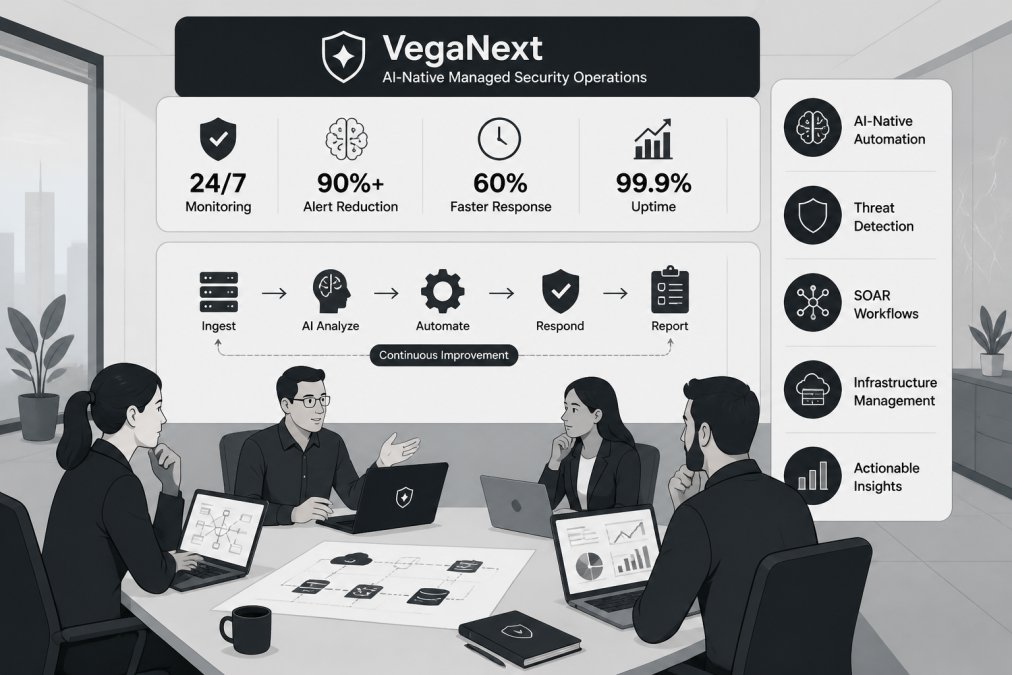
VegaNext represents a fundamentally different approach to the Swimlane replacement decision. Rather than evaluating another platform to manage yourself, VegaNext is an AI-Native Managed Service Provider handling detection, response, and infrastructure management as a service.
This matters for organizations lacking dedicated in-house SOC expertise or wanting to offload operational burden. The traditional path, buy a SOAR platform, hire analysts, build playbooks, integrate tools, requires substantial internal investment. VegaNext eliminates that burden.
The platform delivers enterprise-grade cybersecurity through AI automation. Your team doesn't manage the platform; VegaNext's expert team does. They handle 24/7 monitoring, alert triage, incident response, and infrastructure management. The AI automation layer reduces false positives and accelerates response automatically, without requiring your team to build or maintain playbooks.
The key differentiator is the human element. VegaNext isn't pure automation; it's automation plus expert human oversight. When AI flags a potential threat, a real analyst reviews it. When incident response requires judgment calls, your dedicated team makes them. This human-in-the-loop approach prevents the false automation trap where platforms generate alerts faster than analysts can evaluate them.
Common Mistakes When Switching from Swimlane
Underestimating migration complexity. Swimlane playbooks aren't portable code; they're platform-specific workflows. Budget time to rebuild playbooks in the new platform's syntax. Expect 20-30% of existing playbooks to require significant reworking.
Choosing based on feature parity with Swimlane. If you're replacing Swimlane, it's not meeting your current needs. Optimize for outcomes you actually need: faster alert triage, reduced false positives, lower implementation overhead, or managed operations.
Treating the platform as the solution. A SOAR platform is a tool. Your outcomes depend on integration with your security stack, playbook effectiveness, and team usage.
Ignoring the human element. Modern security operations require both automation and expertise. Pure automation generates noise. The right balance depends on your team's size, expertise, and environment complexity. Platforms like VegaNext combining automation with expert oversight often deliver better outcomes than self-managed platforms.
Locking into annual contracts without piloting. Most vendors offer trial periods. Spend 30-60 days with a platform before committing to multi-year contracts.
The landscape of Swimlane alternatives reflects a broader shift in how organizations approach security operations. The monolithic SOAR platform is giving way to specialized platforms, horizontal automation layers, and managed services. The best choice depends on your team's capabilities, budget, and whether you want to manage a platform or offload that burden to experts. For organizations seeking to modernize security operations, VegaNext offers a path eliminating the Swimlane replacement decision entirely: you partner with a team handling detection, response, and infrastructure as a service. For teams preferring to manage their own platform, Tines and Torq offer modern alternatives. Either way, the era of one-size-fits-all SOAR platforms is ending.
Frequently Asked Questions
What are the main reasons organizations switch from Swimlane to other Swimlane alternatives?
Organizations migrate from Swimlane for several reasons: alert fatigue from false positives, implementation complexity, high total cost of ownership, and limited AI-native capabilities. Many enterprises seek platforms with stronger playbook automation, faster incident triage, and better integration with cloud-native environments. Alert reduction and operational efficiency are the top drivers, especially for healthcare and financial services firms managing 24/7 security operations.
Which no-code AI workflow automation tools are best for replacing Swimlane?
Tines excels for security-focused teams with unlimited connectors and AI-powered workflows. n8n offers developer flexibility with low-code scripting. For broader business automation, Zapier and Microsoft Power Automate provide extensive app integrations. However, for security orchestration specifically, Tines and enterprise platforms like Torq or Cortex XSOAR outperform general-purpose no-code tools in alert triage and incident response speed.
How do AI automation for SOC operations platforms reduce alert fatigue?
Modern SOC automation platforms use machine learning and threat intelligence to filter noise, prioritize genuine threats, and auto-triage low-risk alerts. Platforms like Torq and Cortex XSOAR employ autonomous workflows and predictive analytics to reduce manual intervention. They correlate data from multiple sources, suppress duplicate alerts, and execute remediation playbooks without human review. This approach can reduce alert volume by 60-80%, allowing analysts to focus on critical incidents.
What is the typical migration path from Swimlane to a new platform?
A successful migration involves: mapping existing playbooks to the new platform's workflow syntax, testing integrations with your current security stack, piloting on non-critical workflows first, and running parallel operations during transition. Most organizations budget 8-12 weeks for migration. Key steps include API validation, user training, and establishing rollback procedures. Choosing a platform with strong migration support and professional services reduces timeline and risk.
This article was written using GrandRanker