 listicle
Managed Infrastructure Services for Enterprises: A 2026 Guide
Table of Contents
- What Are Managed Infrastructure Services?
- Core Components of Enterprise Infrastructure Management
- Key Benefits for Enterprise Operations
- Enterprise Infrastructure Management Best Practices
- Proactive Monitoring, Maintenance, and Risk Mitigation
- Managed IT Infrastructure Services Pricing Models
- IT Infrastructure Management Tools and Technology
- Evaluating Managed Infrastructure Service Providers
- Frequently Asked Questions
Last Updated: August 7, 2026
What Are Managed Infrastructure Services?
Managed infrastructure services represent a fundamental shift in how enterprises handle IT operations. Organizations outsource day-to-day management, monitoring, and optimization of IT infrastructure to specialized providers, allowing internal teams to focus on strategic initiatives while external experts handle routine maintenance, security updates, incident response, and performance optimization across servers, networks, data centers, and cloud environments.
The scope typically includes infrastructure monitoring and alerting, patch management and system updates, backup and disaster recovery, security management and threat detection, capacity planning and resource optimization, and incident response and technical support. What distinguishes managed infrastructure services from basic IT support is the proactive, 24/7 operational model. Rather than waiting for problems to occur, managed service providers continuously monitor systems, predict failures, and prevent downtime before it impacts business operations.
Core Components of Enterprise Infrastructure Management
Enterprise infrastructure management encompasses several interconnected systems: network management covering bandwidth usage, routing efficiency, and connectivity; server management for physical and virtual infrastructure; storage management ensuring data availability and recovery capabilities; and cloud infrastructure management across AWS, Microsoft Azure, Google Cloud, and private environments.
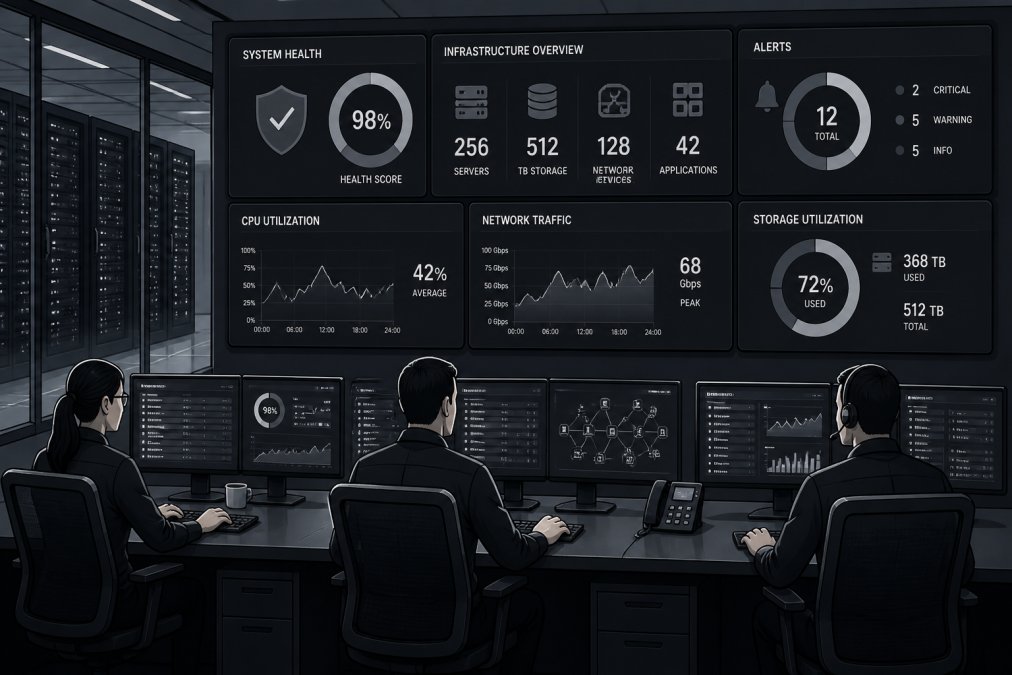
Security management includes vulnerability scanning, patch deployment, access control, and threat monitoring. Database management ensures optimal performance and rapid recovery for mission-critical systems. Capacity planning and resource forecasting help organizations anticipate growth and avoid bottlenecks. Automation and orchestration tools enable rapid deployment, configuration management, and scaling without manual intervention. For enterprises managing complex, distributed infrastructure, coordinating these components requires dedicated expertise that managed service providers bring.
Key Benefits for Enterprise Operations
The primary benefit of managed infrastructure services is operational continuity. By ensuring 24/7 monitoring and rapid incident response, these services minimize unplanned downtime. Enterprises can commit to service level agreements guaranteeing 99.5% to 99.99% uptime with financial penalties if providers fail to meet commitments.
Cost reduction emerges as another significant advantage. While enterprises invest in managed services, the elimination of internal infrastructure management overhead, reduced downtime costs, and optimized resource use typically deliver measurable ROI. Organizations avoid hiring specialized infrastructure staff, purchasing expensive monitoring tools, and managing licensing complexity.
Enhanced security posture represents a critical benefit, particularly for regulated industries. Managed service providers maintain current security practices, deploy patches rapidly, monitor for suspicious activity, and respond to incidents with trained security teams. Scalability and flexibility allow enterprises to grow without proportionally increasing infrastructure management complexity. Access to specialized expertise is often underestimated, modern infrastructure management requires knowledge spanning multiple platforms, architectures, and emerging technologies.
Enterprise Infrastructure Management Best Practices
Successful enterprise infrastructure management begins with clear governance and defined processes for change management, incident response, capacity planning, and security compliance. Regular assessment and optimization of infrastructure is essential, including periodic reviews of resource use, cost analysis, performance metrics, and security posture.
Disaster recovery and business continuity planning must be integrated into infrastructure management, involving regular testing of recovery procedures, geographically distributed backups, and documented recovery objectives. Documentation and knowledge management prevent critical information from residing solely with individual team members. Performance baseline establishment provides context for identifying problems, by understanding normal performance characteristics, teams can quickly recognize deviations.
Proactive Monitoring, Maintenance, and Risk Mitigation
Proactive monitoring distinguishes managed infrastructure services from traditional IT support. Managed service providers continuously collect performance data, analyze trends, and identify potential problems before they impact operations, significantly reducing unplanned downtime.
Predictive maintenance uses historical performance data to anticipate hardware failures. Storage systems showing degrading performance can be replaced before failure occurs. Patch management represents a critical risk mitigation function, managed service providers maintain current awareness of emerging vulnerabilities, prioritize patches based on risk severity, and deploy updates in coordinated windows that minimize service disruption.
Vulnerability assessment and remediation identifies weaknesses in infrastructure before attackers can exploit them. Incident response capabilities become critical when problems occur, with documented procedures, trained personnel, and communication protocols enabling rapid response and root cause analysis.
Managed IT Infrastructure Services Pricing Models
Managed infrastructure services pricing varies significantly based on infrastructure scope, service level requirements, and provider capabilities. Fixed monthly fees provide cost predictability for enterprises with stable, well-defined infrastructure. Usage-based pricing scales with actual resource consumption and works well for variable workloads. Tiered pricing models combine elements of both approaches, providing some cost predictability while allowing flexibility for growth.
Percentage-of-spend models, common in cloud-managed services, charge a percentage of underlying cloud infrastructure costs and align provider incentives with cost optimization. Performance-based pricing ties costs to service level achievement, creating strong incentives for providers to maintain high service quality. For enterprises evaluating managed infrastructure services, requesting detailed pricing quotes that clearly itemize costs by service component helps with budget planning.
IT Infrastructure Management Tools and Technology
Modern infrastructure management relies on sophisticated tools providing visibility, automation, and control across complex environments. Monitoring platforms collect performance data from servers, networks, storage systems, and applications, providing real-time visibility into infrastructure health. Configuration management tools maintain consistency across infrastructure by defining desired configurations and automatically enforcing them.
Orchestration and automation platforms enable complex operations to execute without manual intervention. Cloud management platforms provide unified control across multiple cloud providers and on-premises infrastructure. Security information and event management (SIEM) systems aggregate security logs from across infrastructure, enabling threat detection and incident response. Backup and disaster recovery solutions ensure data protection and business continuity through automated scheduling, integrity verification, and rapid recovery capabilities.
Evaluating Managed Infrastructure Service Providers
Selecting the right managed infrastructure service provider requires careful evaluation of capabilities, experience, and alignment with organizational requirements. Begin by clearly defining infrastructure scope, service level requirements, compliance obligations, and budget constraints.
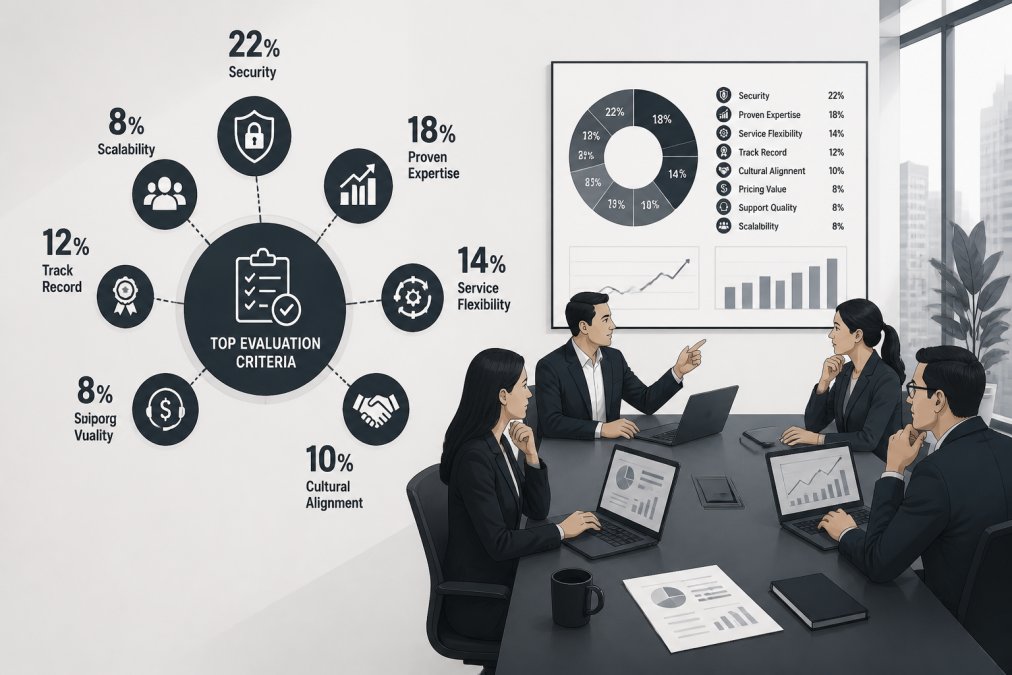
Provider experience with your specific infrastructure types is essential. Service level agreements should clearly define uptime commitments, incident response times, and resolution procedures. Security capabilities deserve particular attention, evaluate the provider's approach to vulnerability management, patch deployment, access control, and threat detection. For regulated industries, verify compliance with relevant standards like HIPAA, SOC 2, or PCI-DSS.
Scalability and flexibility should accommodate future growth. Cost structure and transparency help with budget planning and avoid unexpected expenses. Communication and support responsiveness are critically important, evaluate how the provider handles incident communication, escalation procedures, and regular reporting. Reference customers and case studies provide insight into provider performance and reliability.
Evaluating managed infrastructure services requires understanding both your infrastructure complexity and the provider capabilities essential for your business. VegaNext brings AI-native infrastructure management capabilities, enterprise-grade security, and AI automation that enable organizations to move beyond basic monitoring toward intelligent, predictive infrastructure operations. For enterprises managing critical infrastructure, the right managed service provider becomes a strategic partner enabling operational excellence, security compliance, and cost optimization while freeing internal teams to focus on innovation rather than maintenance.
Frequently Asked Questions
What are managed infrastructure services?
Managed infrastructure services are outsourced IT operations where a specialized provider handles monitoring, maintenance, patching, backup, disaster recovery, and security of your enterprise's physical servers, networks, data centers, and cloud environments. The provider takes responsibility for 24/7 uptime, incident response, and operational efficiency, allowing your internal team to focus on strategic initiatives rather than routine infrastructure tasks.
How much should managed IT infrastructure services cost for an enterprise?
Pricing varies significantly based on infrastructure complexity, number of servers, support tier, and service scope. Models typically include percentage of cloud spend (5-25%), fixed monthly fees starting at $20,000+, or per-resource pricing. Enterprise costs depend on whether you need hybrid management, compliance requirements, and geographic support. Request custom quotes from providers to understand your specific investment.
What are the key benefits of outsourcing enterprise infrastructure?
Outsourcing infrastructure reduces operational burden, provides 24/7 expert monitoring and incident response, improves security and compliance posture, optimizes costs through better resource allocation, enables faster scalability, and frees your IT team to focus on innovation. Enterprises typically see improved uptime, faster incident resolution, and reduced capital expenditure on hardware and staff.
What security standards should enterprise managed service providers meet?
Providers should comply with SOC 2 Type II certification, HIPAA (for healthcare), GDPR (for data protection), and industry-specific standards like NIST Cybersecurity Framework or PCI-DSS. They should offer encryption, identity and access management, regular security audits, incident response protocols, and detailed compliance reporting. Verify their certifications and security practices before engagement.
How do you evaluate a managed infrastructure service provider?
Assess their experience with your infrastructure type (hybrid, cloud, on-premises), verify SLA guarantees for uptime and response times, check security certifications and compliance capabilities, review their incident response process, confirm 24/7 support availability, evaluate automation and AI-driven capabilities, and request references from similar-sized enterprises. Compare pricing models and ensure they can scale with your growth.
This article was written using GrandRanker