 how-to
Secure Business Data in Glendale: A 2026 Guide
Table of Contents
- Why Securing Business Data Matters Now
- Core Security Measures to Implement
- Data Breach Prevention Strategies for Your Organization
- Cybersecurity Compliance and CCPA Requirements
- Managed IT Services: Local Support for Enterprise Security
- AI-Powered Detection and Response
- Common Mistakes That Leave Data Vulnerable
- Frequently Asked Questions
Last Updated: September 23, 2026
Why Securing Business Data Matters Now
Business data breaches are happening faster than ever. Criminals target companies of all sizes, from startups to Fortune 500 firms. If your data isn't protected, you're at risk.
The stakes are real. A single breach can shut down operations for days. Customer trust disappears overnight. Legal penalties follow. For businesses in the Los Angeles area, California's strict data protection laws add another layer of urgency.
This guide covers how to secure business data in Glendale and across the region, showing you how to secure business data effectively. We'll walk through practical security measures, compliance requirements, and strategies that actually work. By the end, you'll know exactly what to do next. Comprehensive protection extends beyond static files to include the protocols needed to secure live video streaming during high-stakes corporate communications.
Core Security Measures to Implement
Strong security starts with the fundamentals. Most breaches happen because basic protections are missing or weak. Fix these first.
Access Control and Authentication
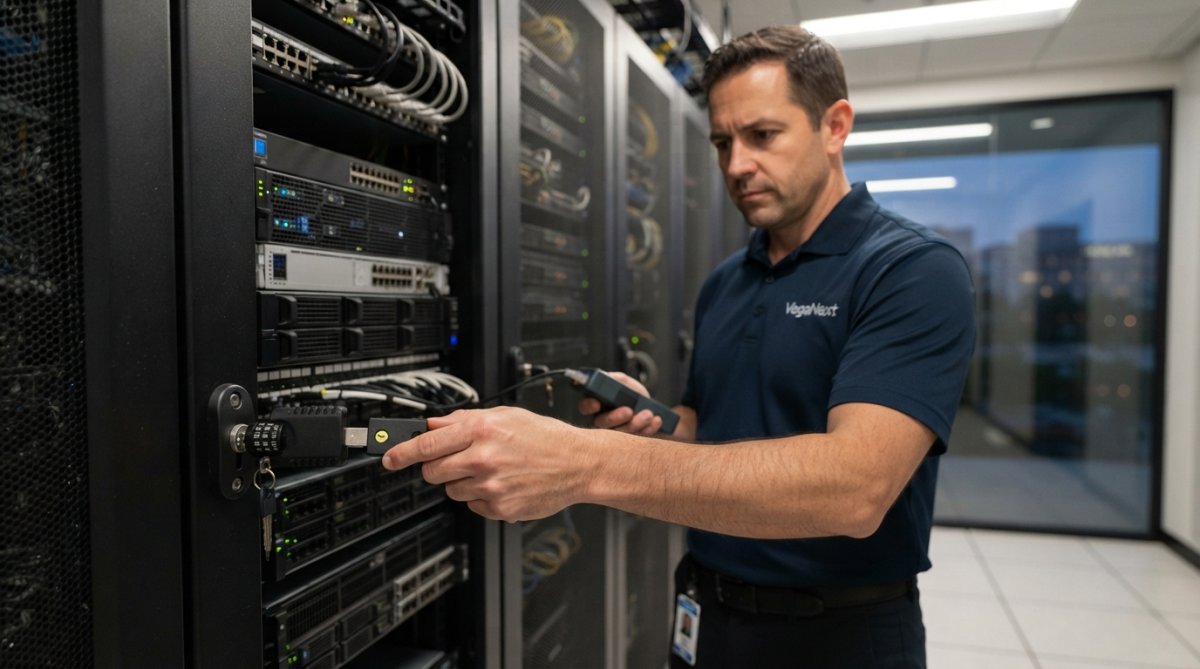
Access control means limiting who can see what data. Not every employee needs access to everything.
Start here:
- Create user roles based on job function
- Give people only the access they need
- Remove access immediately when someone leaves
- Review permissions quarterly
Multi-factor authentication (MFA) adds a second verification step. Someone trying to log in needs both a password AND a second factor (like a code from their phone).
MFA stops most account takeovers. Even if a password gets stolen, the attacker can't get in without the second factor.
Encryption at Rest and in Transit
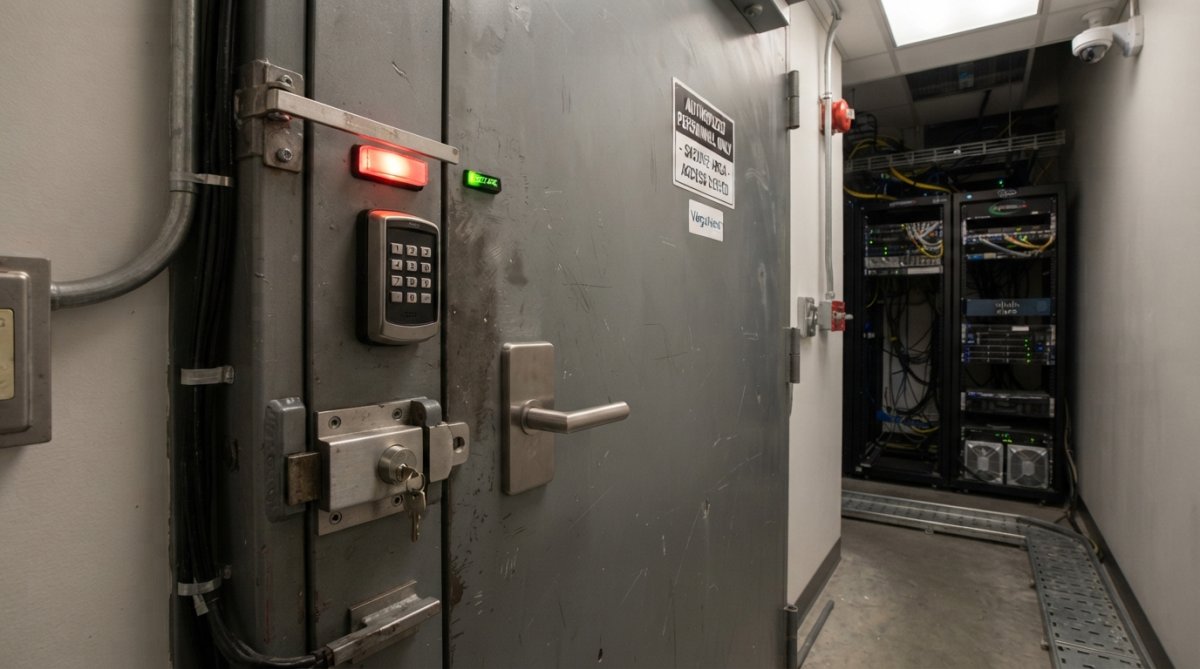
Encryption at rest protects data sitting on servers or storage devices. Think of it as locking files in a vault.
Encryption in transit protects data moving between systems. This is data traveling over networks.
Both matter equally:
- Encrypt sensitive files before storing them
- Use HTTPS for all web connections
- Encrypt email containing confidential information
- Encrypt data on laptops and mobile devices
Encryption makes stolen data useless. A thief gets files they can't read.
Network Segmentation
Network segmentation splits your network into smaller sections. Each section has its own security rules.
Why this works:
- If one section gets breached, others stay safe
- Attackers can't move freely across your entire network
- You can monitor traffic more closely in smaller zones
- Critical systems get extra protection
Start by separating your most sensitive data onto its own network segment. Healthcare systems, financial records, and customer databases all belong in restricted zones.
Data Breach Prevention Strategies for Your Organization
Prevention beats cleanup. A breach that never happens costs nothing.
Focus on these proven approaches:
Employee training matters most. Phishing emails trick people into giving up access. Train staff to spot suspicious emails. Make it easy to report them.
Patch systems regularly. Software updates fix security holes. Delays leave vulnerabilities open. Set a schedule and stick to it.
Monitor for unusual activity. Watch for logins from strange locations or times. Flag large data transfers that don't match normal patterns. Catch problems early.
Backup critical data. Keep copies separate from your main systems. If ransomware hits, you can restore from backup without paying criminals.
Limit third-party access. Vendors and contractors need access sometimes. Give them only what they need. End access when work is done.
Use strong password policies. Require passwords with 12+ characters, numbers, and symbols. Ban common passwords. Consider a password manager.
Businesses in Glendale and throughout Los Angeles face the same threats as everywhere else. The difference is execution. Companies that follow these steps consistently see fewer breaches.
Cybersecurity Compliance and CCPA Requirements
California's Consumer Privacy Act (CCPA) sets strict rules for how you handle personal data. Violations mean heavy fines.
What CCPA requires:
- Tell customers what data you collect
- Let customers see their own data
- Delete data when requested
- Don't sell data without permission
- Report breaches within 72 hours
Many businesses assume CCPA only applies to California residents. It doesn't. If you serve any California customer, CCPA applies to you.
For Los Angeles businesses, this is your local law. Compliance isn't optional.
Beyond CCPA, consider these standards:
- HIPAA (healthcare data)
- PCI DSS (payment card data)
- SOC 2 (service providers handling client data)
Check which regulations apply to your industry. Then build security around them.
Managed IT Services: Local Support for Enterprise Security
Most businesses lack in-house security experts. Building a team is expensive and slow.
Managed IT services fill this gap. A provider monitors your systems 24/7. They handle patches, backups, and threat detection.
VegaNext delivers enterprise-grade cybersecurity and infrastructure management designed for complex environments. Our AI-native approach detects threats. We handle the technical work so your team focuses on business.
For organizations in Los Angeles managing hybrid infrastructure, legacy systems, and cloud workloads, local support matters. You need a provider who understands your environment.
VegaNext's managed detection and response service combines human expertise with AI automation. We identify threats, respond to incidents, and keep your data secure.
AI-Powered Detection and Response
AI changes how security works. Traditional tools generate thousands of alerts. Most are false alarms. Your team gets overwhelmed.
AI-powered systems learn what normal looks like. They spot real threats buried in the noise.
What AI detection does:
- Analyzes patterns across millions of events
- Flags unusual behavior automatically
- Responds to threats in seconds, not hours
Response time matters. The faster you stop an attack, the less damage happens.
AI doesn't replace people. It amplifies them. Your team handles the critical decisions. AI handles the repetitive work.
For businesses securing data in Glendale, AI-powered tools are becoming standard. They're the difference between detecting a breach in days versus weeks.
Common Mistakes That Leave Data Vulnerable
Most breaches aren't clever hacks. They're preventable mistakes.
Mistake 1: Ignoring employee training. People remain the weakest link. One phishing click opens the door.
Mistake 2: Delaying patches. You know updates are available. You plan to install them "next week." Attackers exploit the delay.
Mistake 3: Weak password policies. "Welcome123" isn't a password. Neither is "password1." Enforce real complexity.
Mistake 4: No backup strategy. Your data exists in one place. A ransomware attack means you pay or lose everything.
Mistake 5: Trusting vendors blindly. A supplier gets breached. Their systems touch yours. Suddenly you're exposed.
Mistake 6: No incident plan. When breach happens, confusion follows. Hours pass before you know what to do. Have a plan written down.
Mistake 7: Assuming "it won't happen to us." It will. The question is when. Plan accordingly.
Securing business data in Glendale requires attention to fundamentals, compliance with California law, and the right tools. Most organizations lack the in-house expertise to manage security alone. VegaNext provides 24/7 managed detection and response with AI automation, so threats are caught and stopped. Our platform integrates with existing infrastructure and reduces the alert noise that exhausts security teams. Contact VegaNext to discuss how enterprise-grade security works for your organization.
Frequently Asked Questions
What specific steps should I take to secure business data in Glendale?
Start with multi-factor authentication for all user accounts, enable encryption for data at rest and in transit, and implement network segmentation to isolate critical systems. Conduct regular security audits, maintain updated backups offline, and establish an incident response plan. For enterprises, consider managed detection and response services that monitor threats 24/7 and automate response to suspicious activity.
How do I comply with California CCPA as a Glendale business?
The California Consumer Privacy Act requires you to disclose what personal data you collect, allow consumers to access and delete their data, and opt out of data sales. Document your data inventory, implement privacy-by-design practices, and create clear privacy policies. Establish processes to respond to consumer requests within 45 days. Large enterprises should audit third-party vendors for CCPA compliance and maintain detailed records of data processing activities.
Why should I hire a managed IT services provider instead of managing security in-house?
Managed IT services provide continuous monitoring, threat detection, and rapid incident response without the overhead of hiring and training a full security team. Providers maintain current threat intelligence, handle compliance updates, and deliver 24/7 coverage. For organizations with legacy systems and cloud infrastructure, a managed services approach allows your internal team to focus on business priorities rather than constant security maintenance.
How can AI-powered cybersecurity improve my data protection?
AI-native security platforms analyze vast amounts of network traffic and user behavior to detect anomalies and threats faster than traditional rule-based systems. They reduce false positives, decreasing alert fatigue for your team. AI automation can respond to certain threats immediately, such as isolating compromised endpoints or blocking suspicious connections, while escalating complex incidents to human analysts for investigation.