 comparison
Seceon Alternatives for Financial Firms: 2026 Guide
Table of Contents
- Why Financial Firms Are Moving Away From Seceon
- Cybersecurity Compliance for Financial Institutions: What Your Platform Must Support
- Best SIEM for Financial Services: Feature Comparison
- Top Seceon Alternatives for Financial Sector Cybersecurity Requirements
- Total Cost of Ownership and Implementation Timeline
- Migration Challenges and Legacy System Integration
- Managed Service Provider vs. In-House Security Operations
- Conclusion
Last Updated: August 13, 2026
Why Financial Firms Are Moving Away From Seceon
Financial institutions are increasingly evaluating seceon alternatives as their security operations mature. The shift reflects outgrowing a tool that worked for early-stage threat detection but struggles with modern financial infrastructure complexity.
Financial firms operate across multiple cloud environments, legacy on-premises systems, and hybrid architectures while facing mounting regulatory pressure from PCI-DSS, SOX, and GLBA. Alert fatigue from disconnected security tools costs teams hours daily. When a CISO manages 50,000+ daily security events, AI-driven consolidation becomes urgent.
VegaNext and competing platforms address these pain points directly: native AI automation, integrated threat hunting, and regulatory-specific reporting built for financial compliance. The decision to migrate typically comes down to scalability, operational efficiency, and reducing mean time to response (MTTR) from hours to minutes.
Cybersecurity Compliance for Financial Institutions: What Your Platform Must Support
Financial firms operate under strict regulatory frameworks that your platform must handle simultaneously, not as an afterthought.
PCI-DSS requires continuous monitoring of network access, real-time alerting on suspicious activity, and detailed audit logs for every transaction touching cardholder data. SOX demands comprehensive IT general controls, change management tracking, and segregation of duties evidence. GLBA and HIPAA require encryption in transit and at rest, incident response procedures documented in real time, and proof of breach detection within specific windows. GDPR requires data residency controls, breach notification automation, and audit trails proving data protection by design.
Your platform must generate compliance reports automatically. Manual report generation is slow, error-prone, and doesn't scale. Look for built-in mappings to these frameworks, not generic compliance modules requiring customization.
Best SIEM for Financial Services: Feature Comparison
The best SIEM for financial services detects threats in real time, automates incident response, and generates compliance evidence without manual effort. Generic platforms fail because they optimize for one or two of these, not all three.

AI-Driven Threat Detection and Real-Time Monitoring
AI-driven threat detection is now table stakes. What matters is how the AI learns your baseline and adapts to your specific environment.
Behavioral analytics establish normal patterns for users, systems, and network traffic. When activity deviates, a user accessing unfamiliar files, a server making unusual outbound connections, sudden login failures, the system flags it immediately. This User and Entity Behavior Analytics (UEBA) is essential for financial institutions where insider threats and compromised credentials are constant concerns.
Real-time monitoring means alerts arrive within seconds, not hours. For financial firms, this distinction is critical: a breach detected in real time can be contained before funds move. The platform should integrate threat intelligence feeds automatically, correlating internal events with known indicators of compromise.
Automated Incident Response and Alert Fatigue Reduction
Alert fatigue kills security operations. When your team receives 10,000 daily alerts and 99% are noise, the 1% that matters gets missed.
Automated incident response (SOAR) handles routine tasks without human intervention. When suspicious login is detected, the system can automatically block the account temporarily, trigger MFA challenges, isolate endpoints, gather forensic data, and alert appropriate teams with context. This automation reduces alert fatigue by handling low-risk, high-volume events, allowing your team to focus on actual threats. Mean time to response drops from hours to minutes.
Top Seceon Alternatives for Financial Sector Cybersecurity Requirements
VegaNext: AI-Native Managed Detection and Response
VegaNext is an AI-native managed service provider that fundamentally changes how financial firms approach security operations. Rather than buying a SIEM and staffing a 24/7 SOC, you get a managed service where platform and people work together.
The AI-native architecture means threat detection, correlation, and response are built on machine learning from the ground up. For financial institutions, this translates to faster detection of sophisticated attacks that signature-based tools miss.
The managed service component differentiates VegaNext from traditional SIEM platforms. Your team doesn't maintain infrastructure, tune algorithms, or respond to every alert. VegaNext's security analysts work alongside your team, providing 24/7 coverage and expertise difficult to hire in-house.
Pros:
- AI-native architecture built for automation and scale
- Enterprise-grade security with managed service backing
- Infrastructure management included, reducing operational burden
- Seamless integration with existing network infrastructure
Cons:
- Managed service model requires trust in external team
- Less direct control over alert tuning compared to in-house SIEM
- Pricing scales with complexity; large deployments require custom quotes
Best for: Financial firms lacking in-house SOC expertise or wanting to offload 24/7 monitoring to a managed provider.
IBM QRadar SIEM: Enterprise-Scale Threat Detection
IBM QRadar is a SIEM that enterprise financial institutions have standardized on for decades. It's mature with integrations covering nearly every security tool your firm uses.
QRadar's strength is correlation. It ingests data from 700+ sources, firewalls, endpoints, cloud services, identity platforms, and correlates events to surface hidden attack patterns. For financial firms managing complex, multi-layered infrastructure, this breadth is invaluable. The user behavior analytics module detects insider threats and compromised accounts. Risk-based alerting prioritizes threats by likelihood and impact, reducing noise.
Pros:
- Mature platform with deep integration ecosystem
- Strong compliance reporting for PCI-DSS, SOX, HIPAA
- Risk-based alerting reduces false positives
- Flexible deployment (on-premises, cloud, hybrid)
Cons:
- Complex to implement and tune; expect 3-6 month deployment
- High total cost of ownership, especially with large data volumes
- Steeper learning curve for teams new to enterprise SIEM
Best for: Large financial institutions with existing IBM infrastructure and experienced enterprise SIEM teams.
Exabeam Fusion SIEM: Behavior Analytics and Automated Response
Exabeam prioritizes behavior analytics and automation over raw data volume. Instead of ingesting terabytes of logs, it focuses on behaviors that matter: unusual access patterns, impossible travel scenarios, privilege escalation attempts.
The UEBA engine is exceptionally strong, building baselines for every user and entity, then flagging deviations. For financial institutions, this is critical for detecting insider threats and compromised credentials before damage occurs. Pre-built automated response playbooks trigger investigation workflows, notify teams, and collect forensic evidence without manual intervention.
Pros:
- Exceptional behavior analytics and UEBA capabilities
- Pre-built playbooks reduce time to automation
- Cloud-native architecture scales efficiently
- Strong at reducing false positives through behavioral context
Cons:
- Initial setup can be complex; requires careful baseline tuning
- Pricing scales with data ingestion; high-volume environments cost more
- Less extensive integration ecosystem compared to QRadar
Best for: Financial firms focused on insider threat detection and automated response.
Microsoft Sentinel: Cloud-Native SIEM with Scalability
Microsoft Sentinel is the SIEM for organizations committed to the Microsoft ecosystem. If your firm uses Azure, Microsoft 365 Defender, and Windows-based infrastructure, Sentinel integrates natively without custom connectors.
The cloud-native architecture means no infrastructure management. Sentinel scales automatically with data volume on a consumption-based pricing model. The AI component leverages Microsoft's threat intelligence, correlating your internal events with patterns Microsoft observes across millions of customers.
Pros:
- Seamless integration with Microsoft 365 and Azure services
- Consumption-based pricing; no infrastructure to manage
- Scales automatically without capacity planning
- Strong AI-driven threat intelligence from Microsoft's global data
Cons:
- Less mature than QRadar or Splunk; fewer third-party integrations
- Cost can escalate unexpectedly with high data ingestion
- Requires Azure expertise
Best for: Microsoft-centric organizations seeking cloud-native SIEM without on-premises infrastructure.
Splunk Enterprise Security: Advanced Data Analytics
Splunk is a data analytics platform configurable as a SIEM, log analysis tool, or operational analytics system. This flexibility is both strength and burden: Splunk can ingest any data format and correlate it in ways other platforms can't, but configuring it requires expertise.
For financial firms with mature security teams and custom use cases, Splunk's power justifies the complexity. Your team builds detections tailored to your environment rather than relying on vendor-provided rules.
Pros:
- Unmatched flexibility and customization capability
- Powerful search and correlation for complex investigations
- Strong compliance reporting and audit readiness
- Excellent for threat hunting and root cause analysis
Cons:
- High cost, especially with large data volumes
- Steep learning curve; requires security expertise to configure
- Operational overhead; you manage tuning and optimization
- Implementation takes 6-12 months for complex environments
Best for: Large financial institutions with mature security teams needing maximum control.
Total Cost of Ownership and Implementation Timeline
When evaluating seceon alternatives, purchase price is only part of the equation. Total cost of ownership includes implementation, training, ongoing tuning, infrastructure, and security team time.
Managed services like VegaNext front-load expertise but outsource operational control. You pay a monthly fee for 24/7 coverage with predictable costs and no hiring burden, though with less direct control over alert tuning.
Traditional SIEM platforms like QRadar and Splunk require significant implementation effort: expect 3-6 months for full deployment at large institutions. During this window, security architects, engineers, and analysts are dedicated to configuration.
Cloud-native platforms like Sentinel and Exabeam deploy faster (6-12 weeks typical) because less infrastructure setup is required, though faster deployment doesn't mean lower total cost if you lack cloud expertise.
Operational costs are where most organizations underestimate. A SIEM requires constant tuning: new rules, baseline adjustments, integration maintenance. A security team might spend significant FTEs on SIEM operations alone. Managed services reduce this burden significantly.
Migration Challenges and Legacy System Integration
Moving from Seceon to a new platform is not a flip-switch migration. Financial institutions typically run hybrid environments: legacy on-premises systems, cloud workloads, third-party integrations, and custom applications.
Data migration is the first challenge. Do you migrate years of security event history? Most firms create a cutover point: historical data stays in Seceon for archival purposes, and the new platform starts fresh. This requires parallel operation for 30-90 days.
Connector and integration gaps are common. Seceon may have custom integrations your firm built. The new platform may not support them natively. You'll need to build adapters or find alternative data sources, adding 4-8 weeks to implementation.
Alert tuning requires starting from scratch. Your Seceon rules and baselines don't transfer directly. Expect a 60-90 day period where alert volume is high and false positives are common. Your team needs to work through this rather than abandon the migration.
Compliance evidence continuity is critical. Regulators care about continuous monitoring. A gap in security event logging during migration can trigger audit findings. Plan the cutover carefully with system overlap.
Managed Service Provider vs. In-House Security Operations
The decision between a managed service provider and in-house security operations is fundamentally about expertise, cost, and control.
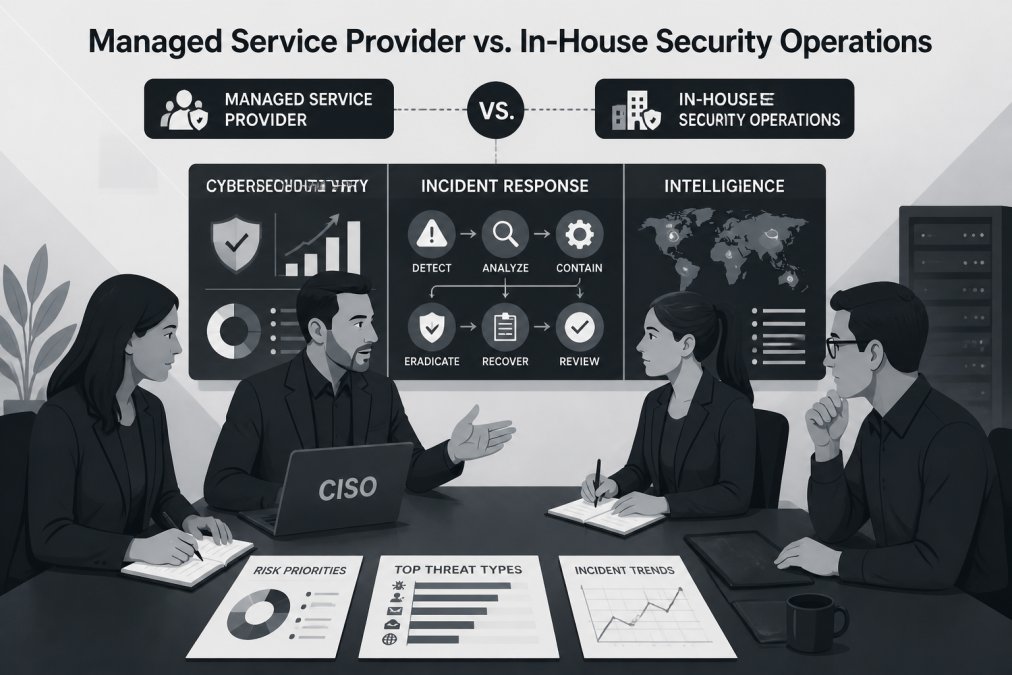
In-house security operations give you direct control. Your team owns the SIEM, tunes rules, and responds to every alert. You understand your environment deeply and customize detection logic to specific risks. The downside: you need to hire and retain experienced security talent. Building a 24/7 SOC requires significant investment in personnel and tools.
Managed service providers like VegaNext handle operational burden. You get 24/7 monitoring, threat hunting, and incident response from specialists. Costs are typically lower than in-house because providers amortize expertise across multiple clients. You also get faster incident response because the provider's team is always staffed and trained on latest threats.
The tradeoff is control. You rely on the provider's processes, alert tuning, and expertise. Vendor selection matters: you need a provider understanding financial sector threats, not a generalist MSP.
For financial firms, the hybrid approach is common: a managed service provider handles routine monitoring and response, while your internal team focuses on threat hunting, compliance, and strategic initiatives. This model provides 24/7 coverage without full SOC overhead.
Frequently Asked Questions
What is the main difference between AI-driven threat detection and traditional SIEM?
AI-driven threat detection uses machine learning to identify anomalies and patterns that traditional SIEM tools miss, reducing false positives by up to 80% and accelerating incident response. Traditional SIEM relies on rule-based alerts, which generate higher volumes of noise. Financial firms benefit from AI because it prioritizes genuine threats, allowing analysts to focus on critical incidents rather than alert fatigue.
Which cybersecurity compliance requirements matter most for financial institutions?
Financial institutions must comply with GLBA (Gramm-Leach-Bliley Act), PCI-DSS (for payment card data), SOX (Sarbanes-Oxley for publicly traded firms), and FDIC regulations. A strong Seceon alternative must support automated compliance reporting, real-time monitoring, and audit trails for all three frameworks. VegaNext, IBM QRadar, and Exabeam all provide pre-built compliance mappings for financial sector cybersecurity requirements.
How long does it take to migrate from Seceon to a new SIEM platform?
Migration typically takes 3-6 months depending on infrastructure complexity, data volume, and integration requirements. Financial firms with hybrid environments (legacy, on-premises, and cloud) often face 6-month timelines. Managed service providers like VegaNext accelerate this by handling migration planning, data mapping, and validation, reducing disruption to your security operations.
What should I expect to pay for a best SIEM for financial services?
SIEM pricing varies widely by platform and ingestion volume. IBM QRadar starts at $10,000/year; Exabeam at $51,000/year; Microsoft Sentinel at $2.46/GB ingested; and Splunk at $1,800/GB/day. Total cost of ownership for financial firms typically ranges from $150,000 to $500,000 annually when including implementation, training, and managed services. Contact VegaNext for a custom quote based on your data volume and compliance scope.
Can Seceon alternatives handle supply chain threat detection?
Yes, modern SIEM alternatives support supply chain security through threat intelligence integration, third-party risk monitoring, and network detection and response (NDR). VegaNext's managed detection service specifically addresses supply chain vulnerabilities by monitoring for unauthorized access attempts and anomalous behavior from external connections, which is critical for financial firms managing vendor risk.
This article was written using GrandRanker