 listicle
Best Managed Detection Response Providers
Table of Contents
- What Is Managed Detection and Response?
- Top Managed Detection and Response Providers Compared
- VegaNext: AI-Native Enterprise Security and Automation
- Arctic Wolf: Concierge Security Team Model
- CrowdStrike Falcon Complete: Breach Prevention Warranty
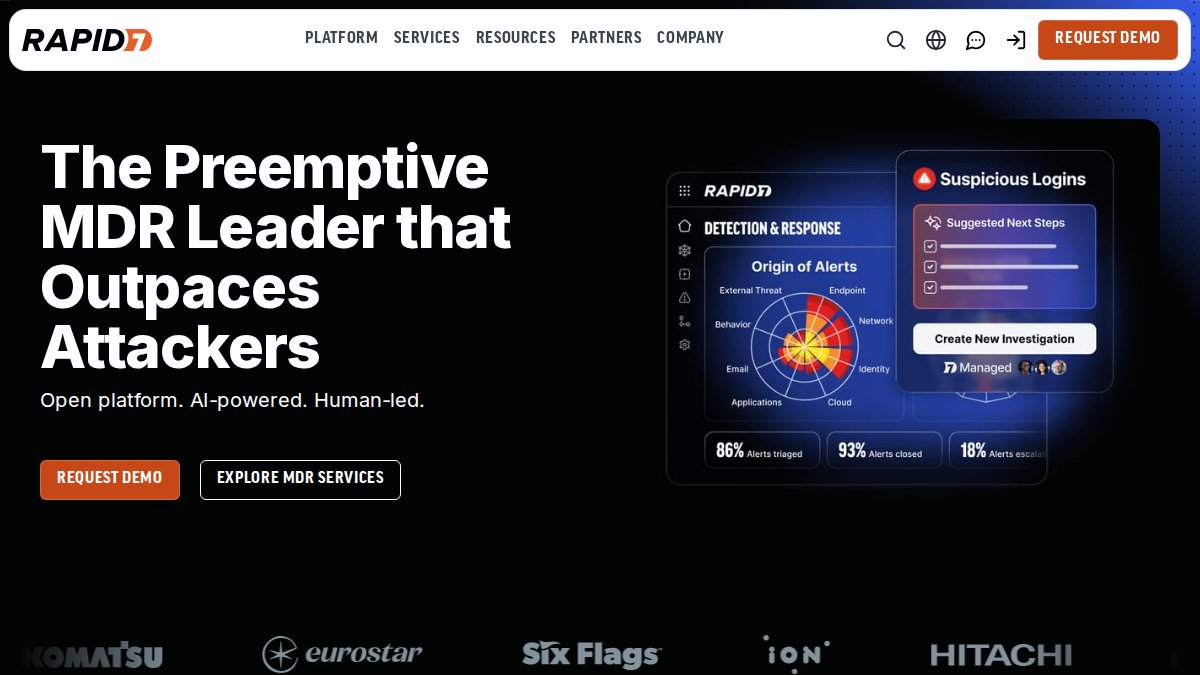
- Rapid7 Managed Threat Complete: Predictable Asset-Based Pricing
- eSentire MDR: Human Expertise and Rapid Containment
- Red Canary MDR: False Positive Reduction
- Palo Alto Networks Unit 42: Cortex XDR Integration
- Sophos MTR: Flexible Third-Party Integration
- Managed Detection and Response Pricing Models Explained
- Best Practices for MDR Implementation
- MDR vs MSSP Differences: What You Need to Know
- Key Features Every MDR Provider Should Offer
- How to Choose the Right MDR Provider
- Conclusion
Last Updated: August 25, 2026
What Is Managed Detection and Response?
Managed detection and response (MDR) is a cybersecurity service combining continuous monitoring, threat detection, and incident response to identify and contain security threats in real time. Unlike traditional security tools that generate alerts, MDR providers employ human analysts and automated systems to hunt for threats, investigate suspicious activity, and execute containment and remediation across your entire infrastructure, 24/7/365.
The core difference between MDR and basic endpoint protection lies in the response layer. An endpoint detection and response (EDR) tool might flag a suspicious process, but an MDR service investigates the alert, determines if it's genuine or a false positive, contains the attack if confirmed, and guides remediation. According to the 2026 Verizon Data Breach Investigations Report, the median time to detect a breach is still measured in months at many organizations. MDR services close that gap by applying expert-level threat hunting and behavioral analysis to detect intrusions that traditional tools miss.
Organizations often struggle simultaneously with drowning in false positives and lacking in-house expertise to respond quickly. MDR addresses both by filtering noise and providing expert response, letting your team focus on strategic security work instead of alert triage.
Top Managed Detection and Response Providers Compared
The MDR market has matured significantly, with providers differentiating on response model, pricing transparency, and integration depth.

1. VegaNext: AI-Native Enterprise Security and Automation
VegaNext is an AI-native managed service provider built for enterprises needing intelligent automation woven into every layer of security operations. The platform combines advanced cybersecurity with AI-driven automation to reduce manual response overhead while improving detection accuracy across endpoints, networks, cloud workloads, and identity systems.
What sets VegaNext apart is the automation-first architecture. Rather than requiring analysts to manually execute remediation steps, the platform uses machine learning to automate threat correlation, prioritization, and containment. The infrastructure management component addresses a gap many MDR providers ignore, ensuring your security posture improves continuously. VegaNext works particularly well for organizations that have migrated to cloud and need a partner who understands hybrid complexity.
2. Arctic Wolf: Concierge Security Team Model
Arctic Wolf assigns your account to a dedicated Concierge Security Team of named individuals who learn your environment, risk profile, and business context. This continuity matters when response speed and accuracy are critical. The concierge model shines for mid-market and distributed enterprises, with analysts who know your infrastructure intimately.
The tradeoff: pricing is custom-quoted and the standard tier provides advisory response rather than active containment.

3. CrowdStrike Falcon Complete: Breach Prevention Warranty
CrowdStrike Falcon Complete is purpose-built for organizations already standardized on the CrowdStrike Falcon platform. Adding Falcon Complete gives you managed threat hunting from CrowdStrike's Adversary OverWatch team.
The standout feature is the breach prevention warranty: up to $1 million in coverage if a breach occurs despite the service. The tradeoff is lock-in, Falcon Complete is optimized for Falcon environments.
4. Rapid7 Managed Threat Complete: Predictable Asset-Based Pricing
Rapid7 Managed Threat Complete stands out for pricing transparency. The asset-based model makes budgeting predictable as your infrastructure scales. The service bundles Rapid7's SIEM (InsightIDR), XDR capabilities, and unlimited vulnerability management (InsightVM), eliminating point tools that don't communicate.
For enterprises, the all-in pricing model, no hourly incident response fees, unlimited log ingestion, 13 months of data retention, becomes compelling.
5. eSentire MDR: Human Expertise and Rapid Containment
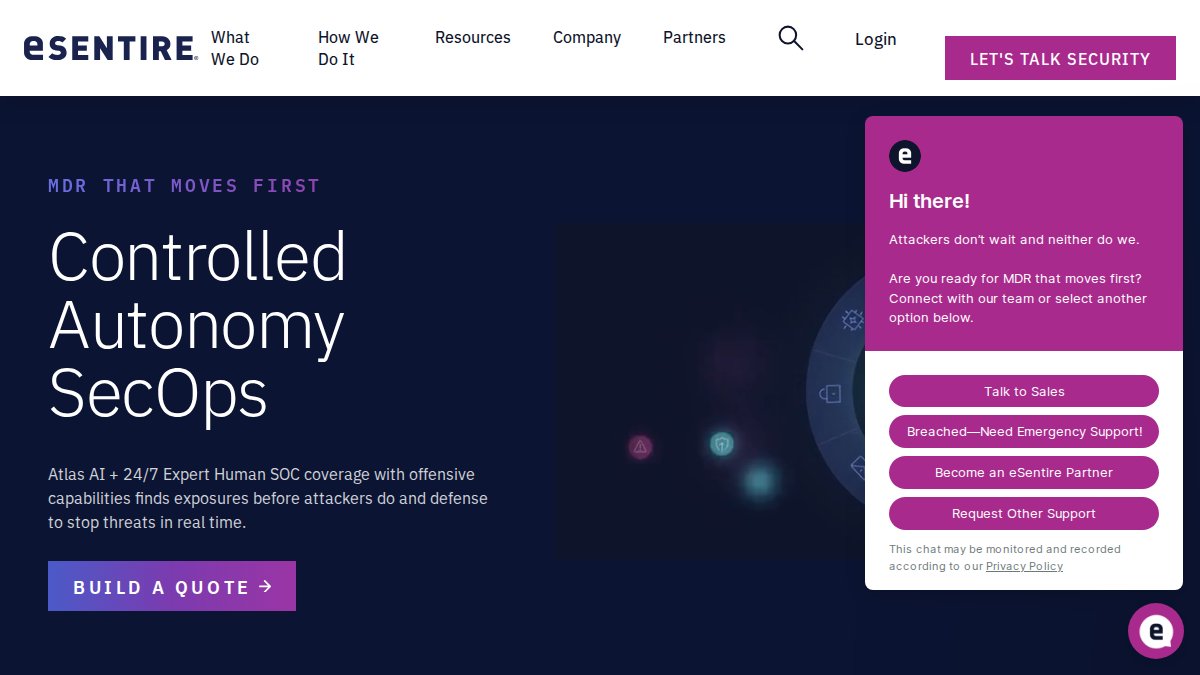
eSentire emphasizes human expertise over automation. Their Threat Response Unit (TRU) team conducts proactive threat hunting with a mean time to containment of 15 minutes on average (peer-reviewed research). The service covers network, endpoint, and unlimited logging. eSentire's open XDR platform integrates with 300+ third-party tools, so you're not forced into a single vendor ecosystem.
6. Red Canary MDR: False Positive Reduction
Red Canary has built a reputation for signal quality, claiming over 99% false positive reduction (peer-reviewed research). The platform is EDR-agnostic, working with your existing endpoint protection rather than forcing a vendor switch. Pricing is resource-based: per endpoint, per user identity, per cloud resource, and per network segment.
7. Palo Alto Networks Unit 42: Cortex XDR Integration
Palo Alto Networks Unit 42 MDR is built on the Cortex XDR platform, providing deep integration with Palo Alto's ecosystem. The service leverages 200+ Unit 42 analysts combining threat intelligence with incident response. Pricing is custom and can be substantial because it layers on top of Cortex licensing and storage fees.
8. Sophos MTR: Flexible Third-Party Integration
Sophos MTR offers flexibility appealing to organizations with mixed security stacks. The service integrates with Sophos endpoint protection, but also works with CrowdStrike Falcon, Microsoft Defender, and SentinelOne. Two tiers exist: MTR Essentials provides guided containment, and MTR Complete provides full incident response with active containment and a $1 million breach protection warranty.
Managed Detection and Response Pricing Models Explained
MDR pricing has evolved from opaque, custom-quote-only models to more transparent structures.
Per-Endpoint Pricing: Arctic Wolf, Rapid7, and Red Canary use variations of this model. Pricing depends on quantity, dates, and delivery.
Per-User Pricing: Some providers charge per user account monitored, favoring organizations with high endpoint-to-user ratios.
Per-Asset Pricing: Rapid7's model charges per asset monitored, endpoints, log sources, cloud workloads, allowing incremental scaling.
Custom Quote: Palo Alto Networks, CrowdStrike, eSentire, and others don't publish pricing. The quote depends on environment size, complexity, service tier, and contract length.
Bundled Pricing: Rapid7 and eSentire bundle threat detection with vulnerability management or SIEM, reducing total cost of ownership.
Request quotes from multiple vendors and model costs against your actual infrastructure. Pricing depends on the provider and service tier.
Best Practices for MDR Implementation
Successful MDR deployment requires preparing the environment, aligning on response procedures, and establishing clear communication with your MDR provider.
Define Your Response Procedures Before Day One
Work with your MDR provider to document incident response procedures before they start monitoring. This includes who gets notified when a threat is detected, how quickly your team responds, what containment actions the provider can take autonomously versus what requires your approval, and how escalation works for critical incidents.
Ensure Complete Telemetry Visibility
MDR effectiveness depends on data. Make sure your provider has visibility into all relevant sources: endpoint activity, network traffic, cloud logs, identity and access management (IAM) logs, and application logs.
Establish a Clear Escalation Path
Define who escalates incidents to leadership, when, and through what channel. A critical incident affecting production systems needs different escalation than a suspicious login from an unusual location.
Schedule Regular Reviews
Monthly or quarterly reviews with your MDR provider keep the relationship healthy. Review detected threats, false positives, and coverage gaps to fine-tune detection rules.
MDR vs MSSP Differences: What You Need to Know
MDR (managed detection and response) focuses on threat detection and response. An MDR provider monitors your infrastructure for signs of compromise, hunts for threats, and responds to incidents.
MSSP (managed security service provider) is broader and often includes vulnerability management, patch management, firewall management, and other security services. In practice, the lines blur, many MDR providers now offer additional services. The key difference: MDR is focused and deep; MSSP is broad and shallow.
Key Features Every MDR Provider Should Offer
Before signing a contract, ensure the provider offers these critical capabilities.
24/7 Monitoring and Threat Hunting: The service must provide round-the-clock monitoring and proactive threat hunting.
Real-Time Alerting and Triage: Alerts should reach you immediately when a threat is detected, with triage to separate genuine threats from false positives.
Incident Response and Containment: The service should include active containment, the ability to isolate compromised systems, kill malicious processes, and block attacker command-and-control communications.
Broad Telemetry Ingest: The provider should collect data from endpoints, networks, cloud platforms, identity systems, and applications.
Integration with Your Existing Tools: Your MDR provider should integrate with your SIEM, EDR, firewall, and cloud platforms.
Compliance Reporting: If you're subject to regulatory requirements (HIPAA, PCI DSS, SOC 2), your MDR provider should generate compliance reports demonstrating continuous monitoring and threat response.
Transparent Pricing and SLAs: Understand what you're paying for and what response times you can expect. SLAs should specify mean time to detect (MTTD), mean time to respond (MTTR), and mean time to contain (MTTC).
How to Choose the Right MDR Provider
Selecting an MDR provider requires evaluating your organization's specific needs against provider capabilities.

Step 1: Assess Your Current Security Posture
Understand where you stand. What endpoints do you have? What cloud platforms? What's your current detection capability? What gaps exist?
Step 2: Define Your Requirements
List non-negotiables: Do you need active containment or advisory response? Must the provider integrate with specific tools you've already invested in? Do you need compliance reporting for a specific framework?
Step 3: Request Demos and Trials
Most providers offer demos or short trials. Use these to evaluate the user interface, alert quality, and ease of integration.
Step 4: Check References
Ask for references from customers in your industry and of similar size. Ask specifically about alert quality, response times, and ease of integration.
Step 5: Model the Total Cost of Ownership
Get quotes from at least three providers. Model costs over three years including service fees, required tool purchases, and internal resource costs.
Step 6: Evaluate the Human Element
You're buying expertise, not just software. Will you have a dedicated point of contact? Can you speak with the analysts who'll respond to your incidents?
Step 7: Start with a Pilot
If possible, pilot the service on a subset of your infrastructure before full deployment.
Conclusion
Managed detection and response has become essential for enterprises managing complex, distributed infrastructure. The threat landscape demands 24/7 monitoring and expert response, capabilities most in-house teams can't provide alone.
VegaNext stands out for organizations needing more than threat detection: the AI-native automation layer accelerates response and reduces alert fatigue while the infrastructure management component ensures your security posture improves continuously. For enterprises evaluating MDR providers, VegaNext's combination of advanced cybersecurity, intelligent automation, and seamless infrastructure integration delivers the enterprise-grade protection and operational efficiency that modern security demands. Get started with VegaNext and transform your threat detection from reactive to proactive.
=== FAQ ANSWERS (audit these too, same rules) ===
[1] Q: How much does managed detection and response typically cost? A: MDR pricing varies widely based on your environment size and complexity. Contact providers directly for custom quotes tailored to your infrastructure.
[2] Q: What is the difference between managed detection and response and EDR? A: Endpoint Detection and Response (EDR) is software installed on devices that detects and responds to endpoint threats. Managed Detection and Response (MDR) is a managed service combining EDR with 24/7 human analyst monitoring, threat hunting, and incident response across your entire environment including network, cloud, and identity systems. MDR provides the human expertise and orchestration that EDR alone cannot deliver, reducing mean time to detect and respond to threats.
[3] Q: What should I look for when implementing managed detection and response? A: When implementing MDR, prioritize integration with your existing security tools and infrastructure. Verify the provider offers 24/7 monitoring with real-time alerts and automated response capabilities. Ensure they provide threat hunting, vulnerability management, and compliance reporting relevant to your industry. Confirm onboarding timelines, SLA commitments, and whether they offer dedicated analyst support. Ask about false positive reduction rates and mean time to contain metrics to validate their effectiveness.
[4] Q: Which managed detection and response provider offers the best 24/7 SOC coverage? A: Arctic Wolf operates a large SOC with 24/7 coverage and a named Concierge Security Team for dedicated analyst support. eSentire reports 99.3% of threats isolated at first host with a 15-minute mean time to contain. Red Canary reduces false positives by over 99%, reducing alert fatigue. Your best choice depends on whether you prioritize dedicated analyst relationships, rapid containment speed, or alert quality.
Frequently Asked Questions
How much does managed detection and response typically cost?
MDR pricing varies widely based on your environment size and complexity. Per-endpoint models range from $8-$25 monthly, while per-asset pricing runs $15-$22 monthly. Per-user models start around $80-$200 annually. Total cost depends on your organization's size, the number of endpoints, cloud workloads, and the level of service (basic monitoring vs. full incident response). Contact providers directly for custom quotes tailored to your infrastructure.
What is the difference between managed detection and response and EDR?
Endpoint Detection and Response (EDR) is software installed on devices that detects and responds to endpoint threats. Managed Detection and Response (MDR) is a managed service combining EDR with 24/7 human analyst monitoring, threat hunting, and incident response across your entire environment including network, cloud, and identity systems. MDR provides the human expertise and orchestration that EDR alone cannot deliver, reducing mean time to detect and respond to threats.
What should I look for when implementing managed detection and response?
When implementing MDR, prioritize integration with your existing security tools and infrastructure. Verify the provider offers 24/7 monitoring with real-time alerts and automated response capabilities. Ensure they provide threat hunting, vulnerability management, and compliance reporting relevant to your industry. Confirm onboarding timelines, SLA commitments, and whether they offer dedicated analyst support. Ask about false positive reduction rates and mean time to contain metrics to validate their effectiveness.
Which managed detection and response provider offers the best 24/7 SOC coverage?
Arctic Wolf operates the largest SOC in the MDR category with 24/7 coverage and a named Concierge Security Team for dedicated analyst support. eSentire reports 99.3% of threats isolated at first host with a 15-minute mean time to contain. Red Canary reduces false positives by over 99%, reducing alert fatigue. Your best choice depends on whether you prioritize dedicated analyst relationships, rapid containment speed, or alert quality. Evaluate each based on your specific security maturity and operational needs.
This article was written using GrandRanker