 blog
blog
AIOps vs Manual Monitoring: Which Scales
Table of Contents
- AIOps vs Manual Monitoring: Core Differences
- Accuracy, False Positives, and Observer Bias
- AIOps Tools for IT Monitoring: Capabilities and Limitations
- Labor, Time, and Operational Efficiency
- AIOps Implementation Best Practices
- AIOps Cost and ROI: What to Expect
- AI-Powered IT Incident Management and Response
- Manual Monitoring Still Has a Role
- Frequently Asked Questions
Last Updated: October 10, 2026
AIOps vs Manual Monitoring: Core Differences
The choice between AIOps and manual monitoring determines operational efficiency, alert accuracy, and incident response speed across healthcare, financial services, and supply chain operations.
AIOps vs manual monitoring represents a fundamental shift in infrastructure visibility. Manual monitoring relies on human observation and periodic sampling. AIOps automates detection, correlation, and response using machine learning and real-time data collection, enabling accuracy, scalability, and pattern detection humans miss.
How Manual Monitoring Works
Manual monitoring depends on human observation and periodic sampling. Teams review logs and dashboards on a schedule, responding when staff notice anomalies. Response time depends on when someone happens to look.
Observer bias is built in: tired technicians miss warning signs, critical systems fail between checks, and teams monitor only what they remember, creating blind spots. A team managing 500 servers needs multiple full-time staff just for basic visibility.
Manual monitoring's advantage is simplicity: no complex integration or model tuning. For small, predictable environments it works. For enterprises with thousands of assets across cloud, on-premises, and hybrid infrastructure, it becomes impossible to scale.
How AIOps Operates
AIOps continuously collects data from every system, correlates events in real time, and identifies patterns indicating problems before they become outages. The system learns what "normal" looks like, then flags deviations automatically.
AIOps ingests metrics, logs, traces, and events simultaneously. Machine learning models detect anomalies, suppress false positives, and prioritize alerts by business impact. A database latency spike is correlated with CPU usage, memory pressure, and network saturation to pinpoint root cause.
Real-time detection happens in seconds, not hours. Automated alerting filters noise and integrates with incident management systems to notify the right team with context.
Accuracy, False Positives, and Observer Bias
Manual monitoring's human judgment degrades under operational stress. Observer bias directly impacts which issues get investigated. Studies show human monitoring systems miss 15-40% of anomalies during high-stress periods, particularly during shift changes or after extended on-call rotations.
False positives plague both approaches differently. Manual systems generate them when rules are too sensitive or humans misinterpret data under pressure. AIOps systems generate them when poorly tuned, but this improves measurably over time.
Measurable Performance Differences
When comparing detection capability, several metrics matter:
Mean Time to Detect (MTTD): Manual monitoring achieves 15-60 minutes MTTD. AIOps achieves 30 seconds to 2 minutes through continuous analysis, a 10-30x improvement that prevents customer-facing outages.
False Positive Rate: Manual monitoring generates 20-50 false positives per 1,000 alerts. AIOps reduces this to 5-15 per 1,000 after a 2-4 week learning period, recovering 10-20 hours of engineering time monthly.
Detection Coverage: Manual monitoring covers only what teams remember. AIOps platforms ingest metrics from 50+ infrastructure components simultaneously, detecting problems in overlooked areas before they propagate.
Observer Bias and Consistency: Manual monitoring decisions vary by shift and fatigue level. AIOps applies identical logic across all hours, providing consistency valuable for compliance audits requiring documented, repeatable detection processes.
Compliance and Audit Trail Requirements
AIOps provides complete, timestamped records of every detection decision. Manual systems rely on incomplete staff logs created after the fact. Healthcare (HIPAA), financial services (SOX, PCI-DSS), and regulated supply chain operations require AIOps' documented, defensible audit trails.
AIOps Tools for IT Monitoring: Capabilities and Limitations
AIOps platforms vary widely. The best integrate with your existing stack, cloud providers, container orchestration, databases, security tools, without requiring months of custom development.
Key capabilities to evaluate:
- Real-time data ingestion: Can the platform handle your volume? A large healthcare enterprise might generate terabytes of logs daily.
- Anomaly detection: Does the system detect novel failure patterns, or only known signatures?
- Root cause analysis: Can it trace an incident back to the underlying cause across multiple systems?
- Integration depth: Does it work with your existing monitoring tools, or does it require rip-and-replace?
- Alerting accuracy: What's the false positive rate, and how does it improve over time?
AIOps requires clean, consistent data and time to learn your environment. It cannot replace human judgment in complex situations where business context matters, a legitimate traffic spike before a major event might be flagged as unusual without business context. Bridging this gap between automated detection and strategic decision-making remains the most critical hurdle when scaling business operations.
AIOps provides consistent 24/7 monitoring without staffing challenges. Manual monitoring requires three shifts of skilled staff just for basic coverage.
Labor, Time, and Operational Efficiency
Manual monitoring is labor-intensive. Enterprise teams need multiple full-time staff for round-the-clock coverage, shift work, on-call rotations, and inevitable burnout.
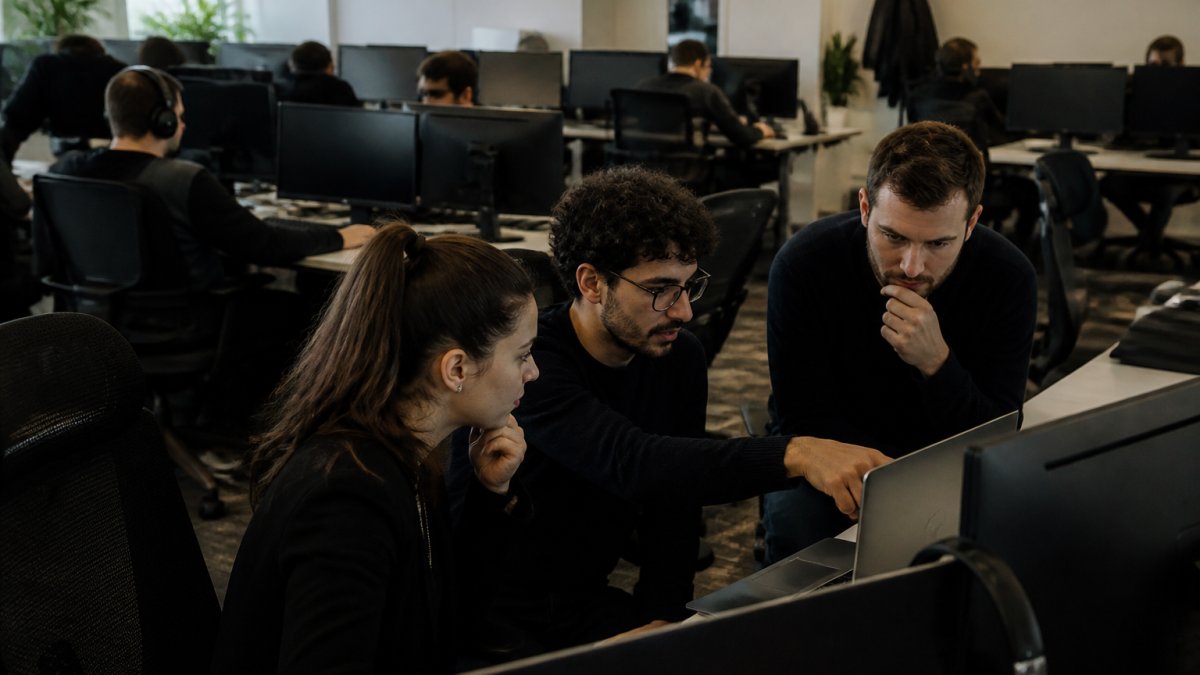
AIOps automates routine detection and response, freeing teams for complex problems and strategic improvements. Incident response drops from hours to minutes, saving downtime and escalation costs.
AIOps detects and begins remediation in seconds. For critical systems, payment processing, patient records, supply chain logistics, those seconds prevent outages and protect revenue.
As infrastructure grows, manual monitoring costs grow linearly. AIOps costs grow much more slowly. An enterprise with 10,000 servers cannot be monitored effectively by humans; AIOps handles it routinely.
AIOps Implementation Best Practices
Successful AIOps deployment requires more than installing software. It requires rethinking how your team approaches monitoring and incident response.
Integration with Existing Systems
AIOps works best when integrated deeply with your existing stack, cloud providers, custom applications, and existing monitoring tools.
Start with integration planning: map data sources, identify critical systems, and ensure logs are clean and structured.
Start with critical systems, prove value, then expand. This phased approach reduces risk and learning time.
Phased Rollout and Human Oversight
Run parallel systems for weeks or months. Let AIOps monitor while humans verify decisions. This builds confidence and catches configuration issues early.
Human oversight remains essential. Skilled staff should review critical decisions. Over time, increase automation, but the human loop never disappears.
Training is essential. Your team must understand how the platform makes decisions, tune it for your environment, and know when to override recommendations.
AIOps Cost and ROI: What to Expect
Understanding AIOps ROI requires comparing platform costs against manual monitoring baseline costs and downtime savings.
Typical AIOps Platform Costs
Pricing for AIOps platforms varies based on data ingestion volume and the number of systems monitored. Integration costs, training, and staffing adjustments are also factors to consider.
Manual Monitoring Baseline Costs
Staffing: Enterprise teams require multiple full-time staff for 24/7 coverage, with costs varying based on the number of staff, salaries, benefits, and other compensation.
Downtime costs: Estimate your cost of undetected outages:
- Healthcare: Downtime costs can be substantial, varying by system criticality.
- Financial services: Downtime costs can be significant, particularly for critical systems like payment processing.
- E-commerce/SaaS: Downtime can lead to revenue loss and customer churn.
- Supply chain: Downtime can result in shipment delays and customer penalties.
If your team detects issues 45 minutes after they occur and experiences 2-4 undetected outages yearly, downtime costs are substantial.
ROI Calculation Example
Calculating ROI for AIOps involves comparing current manual monitoring costs, including staffing and potential downtime expenses, against the investment in an AIOps platform, integration, and training. The goal is to demonstrate how AIOps can lead to significant cost reductions and operational efficiencies.
Variables That Affect ROI
Outage frequency and severity: Frequent, high-impact outages accelerate ROI. Stable infrastructure with rare outages may take 18-24 months to break even.
Current staffing model: Lean teams see less staffing savings but reduced downtime costs. Overstaffed teams see staffing reduction as primary ROI driver.
Data volume and integration complexity: Clean logs and straightforward infrastructure integrate faster. Legacy systems delay ROI by 3-6 months.
Compliance and audit requirements: Healthcare and financial services see additional ROI from improved audit trails and faster documentation, adding 10-20% to calculated ROI.
When AIOps ROI Is Strongest
AIOps delivers the fastest, highest ROI in these scenarios:
- High-availability critical systems where downtime costs are measured in thousands per minute
- Distributed infrastructure (cloud, hybrid, multi-region) where manual monitoring becomes impossible to scale
- Compliance-heavy industries where audit trails and documented detection processes are regulatory requirements
- Rapid growth where infrastructure is expanding faster than staffing can keep up
- Existing monitoring tool sprawl where AIOps consolidates multiple point solutions
AIOps ROI is slower in small, stable environments with predictable patterns, low downtime costs, and sufficient manual monitoring staff. In these cases, the business case relies more on future-proofing and operational efficiency than on immediate cost savings.
AI-Powered IT Incident Management and Response
AIOps extends beyond detection into incident management. When a problem is detected, the system can correlate it with related issues, identify probable root cause, and suggest remediation steps. For routine problems, it can even execute fixes automatically.
Automated response requires careful governance. Not every detected issue should trigger automatic action. Critical systems might require human approval before remediation. Less critical systems might be safe to remediate automatically. The key is defining clear policies and starting conservatively.
Machine learning models improve incident response over time. The system learns which remediation steps work for which problems. It learns which alerts matter and which are noise. It learns your environment's unique patterns and failure modes.
For enterprises managing complex infrastructure, this intelligence becomes invaluable. A platform that understands your systems better than any individual team member provides consistency and prevents expensive mistakes.
Manual Monitoring Still Has a Role
This isn't a binary choice. Most enterprises benefit from combining AIOps with human expertise. Automated systems excel at detecting known patterns and responding to routine issues. Humans excel at understanding context, making judgment calls, and handling novel situations.
Manual observation remains valuable for security monitoring, compliance verification, and understanding user experience. An AIOps system might detect that a service is running slow. A human observer notices that it's slow specifically for users in Los Angeles during peak hours, suggesting a regional infrastructure issue.
The optimal approach uses AIOps to handle volume and routine detection, freeing skilled staff to focus on complex problems, optimization, and strategic improvements. Your best engineers shouldn't spend their time watching dashboards, they should spend it improving systems.
When infrastructure complexity exceeds human capacity to monitor it effectively, AIOps becomes essential. For large healthcare enterprises requiring 24/7 managed detection and response, financial services firms integrating AI automation into existing infrastructure, and supply chain operations securing distributed cloud environments, automated monitoring provides the scale and accuracy manual approaches cannot achieve.
VegaNext delivers enterprise-grade AIOps capabilities designed specifically for organizations managing complex, distributed infrastructure. Our AI-native platform integrates with your existing systems, reduces false positives through continuous learning, and provides the real-time visibility your team needs. With 24/7 managed detection and response from our expert team, you gain both automation and human expertise, the combination that prevents outages, accelerates incident resolution, and protects your critical operations. Learn more about AI-native managed services for enterprise infrastructure
Frequently Asked Questions
What is the main difference between AIOps and manual monitoring?
Manual monitoring relies on IT staff to observe systems, review logs, and identify issues through periodic sampling or direct observation. AIOps uses AI-powered automation to continuously analyze data, detect anomalies in real time, and trigger alerts without human intervention. AIOps reduces response time from hours to seconds and eliminates the observer bias inherent in manual processes, but requires integration with existing infrastructure and ongoing tuning to minimize false positives.
Can AIOps completely replace manual monitoring and human IT teams?
No. AIOps automates detection and initial response but still requires human oversight for decision-making, validation, and complex incident resolution. The best approach combines AI-powered automation for routine monitoring and alerting with skilled IT staff for investigation, escalation, and strategic planning. Even organizations with mature AIOps implementations maintain security and operations teams, they just spend less time on repetitive tasks and more on high-value work.
How does AIOps reduce false positives compared to manual monitoring?
AIOps uses machine learning to establish baselines of normal system behavior and correlate alerts across multiple data sources. This correlation filtering reduces noise by 60-80% compared to traditional rule-based alerting. Manual monitoring often generates false positives due to observer fatigue and inconsistent interpretation of data. However, AIOps can still produce false positives if not properly trained, so implementation requires initial tuning and ongoing feedback loops to refine detection accuracy.
What should we measure to compare AIOps and manual monitoring effectiveness?
Key metrics include mean time to detection (MTTD), mean time to resolution (MTTR), alert accuracy (true positive rate), staff workload (hours spent on routine monitoring), operational costs, and compliance reporting speed. AIOps can significantly reduce MTTD and MTTR and lower labor costs, but ROI depends on your current manual process maturity and integration complexity. Track these metrics before and after implementation to quantify the business impact.